
Tutorials
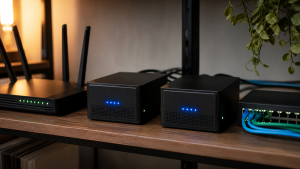
Fix DNS Once: Router vs PC vs Browser, and How to Stop Settings Fighting
DNS problems get messy when the router, operating system, browser, VPN, and IPv6 all disagree. This guide shows where to change DNS once and how to prove it worked.
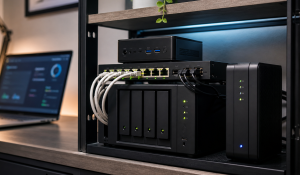
How Do You Document a Homelab So Someone Else Can Recover It?
Document the minimum facts needed to keep the house working: what runs where, how to log in, what must be paid, what can be turned off, and who to call. The goal.
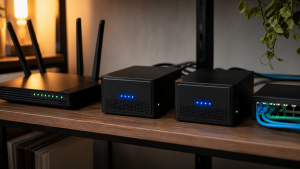
Malware-Blocking DNS for the Whole House: Set It Once, Prove It Works
Use router-level DNS filtering to block known malware and phishing domains for every device, then handle IPv6, browser DoH, VPNs, and false positives.
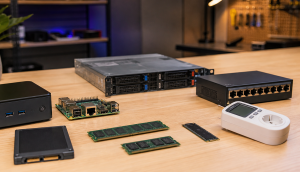
Used Enterprise Server vs Mini PC: Which Homelab Buy Makes Sense?
Used enterprise servers are worth it when you need PCIe lanes, drive bays, ECC memory, lab realism, or noisy hardware experience. Mini PCs are usually better for always-on home services because they.
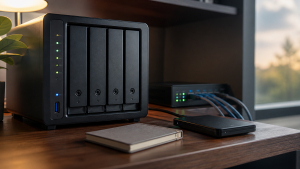
NAS vs DAS vs Mini PC: Which Storage Setup Should You Actually Buy?
A practical storage decision guide for choosing a NAS, DAS, or mini PC based on sharing, speed, apps, backup, and upkeep.

The 2026 Travel Router Kit: Safer Hotel Wi-Fi Without Rebuilding Your Network
A field-tested travel-router kit for hotels, rentals, conferences, and family trips: router, VPN plan, captive portal workflow, power, cables, and validation checks.
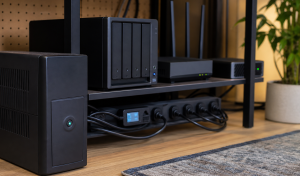
How Much Does a Homelab Really Cost in Electricity?
Electricity cost is simple to estimate: watts x 24 x 365 / 1000 x your kWh rate. The surprise is not one server; it is the combined idle load of router, switches.
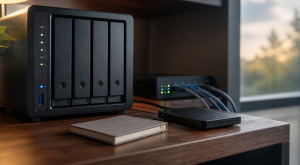
Google Drive Is Not a Backup: What It Protects, and What It Does Not
Google Drive is useful sync and sharing, but it is not a full recovery plan for deletion, ransomware, account loss, or bad sync events.

Wi-Fi 7 and Wi-Fi 8 Buyer Guide: What Is Real, What Is Marketing
Wi-Fi 7 can be worth it, but only if clients, backhaul, ports, and spectrum support it. Wi-Fi 8 is not a 2026 shopping requirement.
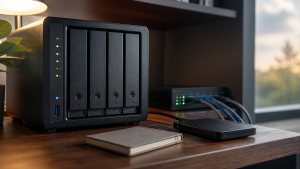
RAID, ZFS Snapshots, Sync, and Backup: What Each One Does Not Protect
Use all four for different jobs. RAID keeps storage online after some disk failures, snapshots recover recent local changes, sync moves current files between places, and backup restores data after loss, corruption.