
Homelab
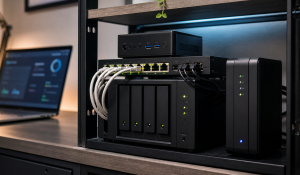
The 2026 Self-Hosted Starter Stack: What People Actually Run
A pragmatic 2026 self-hosted starter stack: host OS, Docker Compose, DNS, remote access, reverse proxy, backups, monitoring, and daily-driver apps.
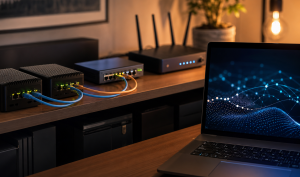
It Is Always DNS: Pi-hole, AdGuard Home, Technitium, and the SPOF Problem
A practical DNS design guide for Pi-hole, AdGuard Home, and Technitium that avoids the single-point-of-failure trap.
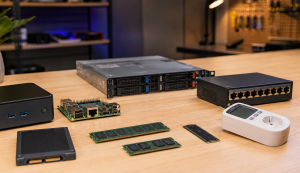
Orange Pi 6 vs Raspberry Pi 5 for Homelab: Powerful Hardware, Real Tradeoffs
Orange Pi 6 brings dual 2.5GbE, dual NVMe, LPDDR5, and serious AI claims to a tiny board, but software support and total cost decide whether it belongs in your homelab.
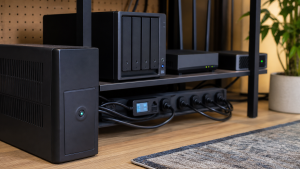
UPS Buying Guide for Home Servers: Runtime Is Not the Main Point
A practical UPS buying guide for home servers, NAS devices, routers, and homelabs focused on clean shutdown, sizing, USB signaling, and battery maintenance.
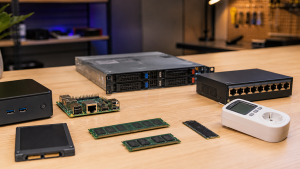
Old Gaming PC vs Mini PC: The Real Power-Cost Math for 24/7 Servers
A practical power-cost guide for deciding whether an old gaming PC or an efficient mini PC makes more sense as a 24/7 home server.
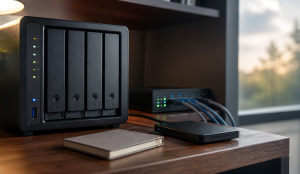
NAS vs DAS vs Mini PC: The Storage Decision Tree
A practical decision tree for choosing NAS, DAS, or mini PC storage based on who needs the files, how apps run, and how recovery should work.

The Beginner Homelab Buying Guide: Start Small, Upgrade Later
A no-regrets beginner homelab buying guide: start with one useful workload, buy the boring basics first, and upgrade when the lab earns it.

The Complete Plex, Arr, and Tdarr Homelab Media Automation Series
A full map of the Plex, Arr, Tdarr, storage, GPU, reverse-proxy, backup, and monitoring guides needed to run a lawful, recoverable media homelab.
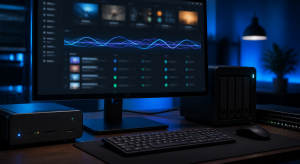
How Seerr and Tracearr Fit Into a Plex, Arr, and Tdarr Homelab
A detailed architecture guide showing how Seerr request intake and Tracearr playback analytics complete a Plex, Radarr, Sonarr, Prowlarr, SABnzbd, and Tdarr homelab workflow.
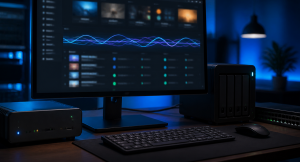
Tracearr Setup Guide for Plex, Jellyfin, and Emby Monitoring
Deploy Tracearr with Docker, connect Plex, Jellyfin, or Emby, validate live sessions and alert-only rules, and preserve a recoverable monitoring history.