
AI
Local AI Is Finally Useful: What Should You Run First?
A practical local AI starter guide for Ollama, LM Studio, Open WebUI, embeddings, structured output, private notes, and first useful workflows.
Try Local AI Before You Buy Hardware: A Beginner Gemma and Ollama Guide
A noob-friendly, step-by-step guide to trying Google's Gemma AI models on your current PC with Ollama before spending money on new hardware.
Run Google Gemma Locally with Ollama, Open WebUI, and Codex CLI
Run Google Gemma locally with Ollama and Open WebUI, then connect Codex CLI for private coding workflows. Includes Docker setup, GPU sizing, Tdarr notes, and security guidance.
Local AI Homelab: Hardware for Ollama, Open WebUI, and Small Agents
A practical local AI homelab hardware guide for Ollama, Open WebUI, GPUs, CPU-only experiments, VRAM sizing, and safe small agents.
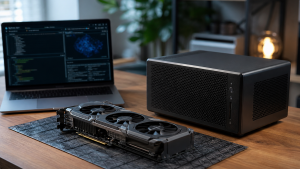
NVIDIA vs Intel Arc for Ollama and Local AI Workloads
Check exact NVIDIA and Intel Arc support, memory fit, drivers, and GPU placement before buying hardware for Ollama, llama.cpp, or LM Studio.
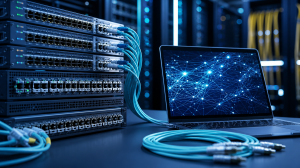
Cisco Catalyst C9550 vs C9350: Choose the Right Campus Role
Map C9350 access requirements and an incumbent C9500 design to a C9550 model, then verify software, optics, licensing, failure tests, and rollback before migration.
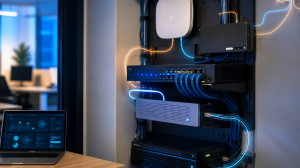
Branch Network Design for the AI Era
AI-era branch design needs SD-WAN, SSE, secure access, local resilience, application steering, Wi-Fi capacity, segmentation, and experience telemetry.
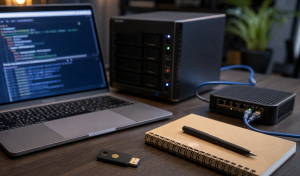
Implementing AgenticOps Safely: Human Approval, Audit Trails, and Rollback
Agentic network operations need guardrails: approved action classes, human review, role limits, dry runs, rollback plans, and audit trails before any production change.
Building a Network Digital Twin Workflow
A network digital twin is useful when it models topology, intent, policy, dependencies, and change impact. Here is a practical workflow for using it safely.
AgenticOps for Network Engineers: Useful Automation or Marketing Term?
AgenticOps is useful only when it is grounded in telemetry, topology, approvals, simulation, and rollback. Here is how network engineers should evaluate it.