
Reverse Proxy Setup Without Security Mistakes: HTTPS for Homelab Apps
 Tech Guru
A reverse proxy is useful for HTTPS, clean hostnames, and routing web apps. It is not a security boundary by itself. Put access control in front of sensitive services, keep admin tools private, and log what is reachable.
Design principle: Make the network boring on purpose: clear ownership, few trust zones, documented DNS, and access paths that fail closed.
The Short Version
- A reverse proxy is useful for HTTPS, clean hostnames, and routing web apps. It is not a security boundary by itself. Put access control in front of sensitive services, keep admin tools private, and log what is reachable.
- The practical decision is operational, not cosmetic: choose the path you can document, test, maintain, and recover.
- Use the decision matrix below, then prove the result with the validation checklist before making it the default.
Why This Matters Now
The first reverse-proxy decision is whether an application belongs on the public web at all. Name its users, authentication boundary, sensitive functions, upstream owner, and removal path before selecting Caddy, Nginx Proxy Manager, Traefik, or an ACME challenge method.
Home labs now run real household services: DNS, photos, media, backups, smart-home control, remote access, and sometimes work-adjacent systems.
The right answer is usually not the largest option. It is the design that is documented, recoverable, and quiet enough to live with.
Prices, firmware, subscriptions, and product bundles change quickly, so verify current model numbers and vendor terms before buying.
This guide follows one approved hostname through DNS, TLS termination, proxy headers, access control, logging, certificate renewal, and rollback. The checks are reader-run: no TechGeeks domain, upstream application, public scan, packet capture, or performance result is presented for this revision.
Recommended Baseline
Give every public hostname one documented path: authoritative DNS, firewall or NAT rule, proxy listener, access policy, upstream address, and application owner. Do not let a second proxy or wildcard record silently publish a route that bypasses the intended authentication and logging controls.
Keep router, firewall, hypervisor, NAS, database, camera, and backup administration on VPN or another private management path. For the one service approved for public users, expose only required HTTP and HTTPS paths, validate identity at the appropriate layer, and retain actionable proxy and application logs.
What Should Never Be Proxied
Router, NAS, Proxmox, firewall, camera, and hypervisor admin interfaces should not be public web apps. Keep them behind VPN or tailnet access.
If a service has weak authentication, slow patching, or sensitive control-plane access, do not put it on the public internet.
DNS And TLS Plan
Use clear names and avoid exposing internal naming patterns unnecessarily. Decide whether the record is public DNS, private DNS, or split DNS.
Use ACME certificates from a supported client. DNS-01 challenges are useful when services should not be reachable publicly.
Pick The Tool
Caddy is good for simple config and automatic HTTPS. Nginx Proxy Manager is friendly for GUI-driven homelabs. Traefik fits dynamic container environments.
The safest tool is the one you understand well enough to update, back up, and troubleshoot.
Access Control And Logs
Add authentication, IP allowlists, or an access proxy before sensitive apps. App login alone may not be enough for internet exposure.
Keep logs long enough to investigate errors and suspicious traffic. Review them after first publication.
Decision Matrix
| Service | Proxy Publicly? | Safer Pattern |
|---|---|---|
| Public website | Maybe. | Reverse proxy with patching and logs. |
| Webhook endpoint | Maybe. | Narrow path, secret validation, logging. |
| Home Assistant | Carefully. | MFA, hardened access, or private remote access. |
| NAS/Proxmox admin | No. | Tailnet or VPN only. |
| Cameras | No. | Private network or VPN only. |
Decision Worksheet
Complete the worksheet for a single hostname. Record whether its audience is public or private, the DNS record and ACME method, the upstream protocol and port, authentication and MFA behavior, required WebSocket or upload handling, log locations, certificate renewal owner, and exact removal steps.
| Worksheet Item | What To Write Down | Why It Matters |
|---|---|---|
| Primary question | What reverse proxy mistakes expose private services? | This keeps the article tied to the reader's real decision instead of drifting into a generic product comparison. |
| Affected systems | The devices and services that lose internet, DNS, Wi-Fi, remote access, or admin reachability if this fails. | Readers should know who and what they are protecting before they choose hardware, software, or a cloud service. |
| Failure model | WAN outage, bad DNS, blocked discovery, stale firewall rules, expired certificates, and lost admin access. | Different failures need different controls. This row prevents RAID, sync, VPN, or MFA from being treated as magic. |
| Proof test | Test from a wired client, Wi-Fi client, phone on cellular, and any VLAN or tunnel that depends on the change. | A recommendation is not proven until it survives a small, repeatable test using realistic data, clients, or accounts. |
| Rollback path | Export config first and identify the old port, SSID, DNS server, or tunnel setting that restores service. | A reversible change is less stressful, easier to explain, and less likely to turn a weekend project into an outage. |
| Measurement to capture | Latency and throughput from the rooms or VLANs that matter, not just beside the router. | Numbers, logs, screenshots, or restore notes give the reader confidence that the decision was based on evidence. |
Decide What Belongs On The Public Edge
A reverse proxy should not become a shortcut around application security. Put only services that are meant to be reached through that path on the public edge. Keep routers, hypervisors, NAS admin panels, camera admin pages, database consoles, and backup tools private.
For public apps, document DNS, certificate method, upstream IP, access policy, upload limits, WebSocket needs, security headers, logs, and backup path. If using Let's Encrypt HTTP-01, the proxy needs reachable HTTP validation. If using DNS-01, protect the DNS token like an admin credential.
Real-World Example
Pilot one low-impact web application under one dedicated hostname, not a wildcard aimed at every internal service. Verify the intended user can authenticate from off-LAN and that an unauthenticated browser, an unapproved path, and every private administration hostname remain denied before publishing anything else.
Trace an external request from public DNS to TCP 443, the proxy listener, any identity layer, the upstream HTTP service, and the application session. Mark where TLS terminates, which proxy headers are trusted, where authorization occurs, and which log would explain a rejection or upstream failure.
A certificate proves control of a hostname during issuance; it does not establish safe application authorization. Treat DNS, edge firewall, reverse proxy, identity provider, and upstream app as separate control points, each with a named configuration owner and logs that can distinguish certificate, routing, authentication, and application failures.
Rollout And Recovery Plan
Before cutover, preserve the proxy configuration, DNS value, certificate strategy, application-consistent backup, and private VPN route. Publish one hostname and narrow firewall rule, then test redirect, certificate chain, authentication, denied paths, headers, uploads or WebSockets if required, and logs from both LAN and cellular clients.
Rollback this exposure by removing or parking the public DNS record, closing the inbound firewall rule, disabling the proxy host, and returning users to the preserved private path. Keep prior proxy configuration and certificate material available, but revoke DNS API tokens or credentials that are no longer required.
Implementation Details
Use a window that allows DNS and certificate mistakes to be corrected before users depend on the hostname. Change one layer at a time: confirm upstream health privately, publish DNS, issue the certificate, enable access policy, then open the edge. Avoid simultaneous application and proxy upgrades during initial exposure.
- Write down the current state before changing anything: devices, accounts, IP addresses, storage paths, and who depends on the service.
- Pilot the recommendation with one device, one folder, one app, or one user before changing the entire home or lab.
- Keep the old path available until validation passes.
- Document rollback steps while the working setup is still fresh.
- Schedule a review date so firmware, subscriptions, certificates, and backups do not drift for months.
Record these details while you build, not after the memory has already gone fuzzy:
- Latency and throughput from the rooms or VLANs that matter, not just beside the router.
- DNS behavior when the WAN is unplugged, VPN is connected, and browser secure DNS is enabled.
- Firewall logs for denied traffic between guest, IoT, management, and trusted networks.
- Open ports and externally reachable hostnames after the change.
Evidence To Collect
Retain evidence for both reachability and denial: DNS answers, certificate hostname and chain, intentional HTTP redirect, authenticated application response, rejected anonymous request, unreachable admin hostname, relevant proxy and application log entries, renewal status, and a written private-path rollback result.
- Current router, firewall, switch, access point, and DNS configuration exports before the change.
- Client evidence from the actual device: IP address, gateway, DNS servers, VLAN or SSID, and browser secure-DNS state.
- A test from outside the house, preferably cellular, when remote access or public exposure is part of the design.
- Firewall, tunnel, proxy, and DNS logs that show both allowed traffic and expected denies.
- A list of open ports, public hostnames, certificate expiry dates, and stale VPN or tailnet devices.
Failure Signals
- Local names stop working when the internet is down.
- Clients randomly use different DNS servers or bypass policy with browser secure DNS.
- Admin pages are reachable from guest, IoT, or public networks.
- No one can describe which device owns routing, DHCP, DNS, and remote access.
Adopt, Pilot, Defer, Avoid
- Adopt: Adopt the network change when ownership, DNS, firewall policy, remote access, and rollback are documented.
- Pilot: Pilot with one client, one VLAN, one hostname, or one tunnel before moving the whole house.
- Defer: Wait when the current setup is stable, backed up, monitored, and the proposed change is mostly curiosity.
- Avoid: Avoid exposing admin interfaces or broad internal networks just because a tunnel or reverse proxy makes it convenient.
Validation Checklist
- Confirm only intended hostnames resolve publicly.
- Run a remote test from cellular and verify redirects and TLS.
- Check security headers where appropriate.
- Confirm admin-only apps are unreachable from the public internet.
- Back up proxy config and certificate strategy notes.
Common Mistakes
- Proxying admin panels because HTTPS looks professional.
- Using wildcard DNS without tracking what it points to.
- Forgetting app-level authentication.
- Breaking WebSocket or upload limits and blaming the app.
- Never reviewing access logs.
Troubleshooting
| Symptom | Likely Cause | First Check |
|---|---|---|
| Clients behave differently | DHCP, browser secure DNS, VPN DNS, IPv6, or manual settings are bypassing policy. | Check the resolver and gateway from the actual client, not only from the router UI. |
| Remote access breaks | Identity, DNS, tunnel routing, firewall policy, or certificate renewal changed. | Test from a mobile hotspot and review logs at the tunnel, proxy, and app layers. |
| Segmentation breaks apps | Discovery or controller traffic was blocked along with broad LAN access. | Add narrow mDNS, controller, DNS, NTP, or app-port exceptions and document them. |
Maintenance Cadence
Review each public hostname on a schedule. Confirm the service still needs public users, DNS points to the intended edge, certificates renew, authentication and MFA policy remain active, proxy and application updates are current, logs arrive, and obsolete routes and accounts are removed.
- Monthly: Check alerts, backups, free space, updates, and the services that other people depend on.
- Quarterly: Run a small failure drill and confirm the recovery note still works.
- Yearly: Review whether the design is still worth its power, maintenance, and support cost.
A useful reverse-proxy drill intentionally stops the upstream and confirms the edge returns a controlled error without exposing internals, then checks certificate-renewal status and the preserved VPN route. Store proxy and DNS recovery notes somewhere accessible when the proxy host itself is unavailable.
When To Spend Money
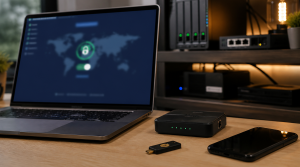
A purchase should answer an observed exposure-control gap. A hardware security key may strengthen administrator or application MFA; a small host may isolate the proxy; a UPS may preserve the edge and network during brief outages. None compensates for publishing the wrong service or skipping updates and logs.
| Stage | Signal | Practical Buying Guidance |
|---|---|---|
| Do not buy yet | Coverage, DNS behavior, firewall policy, and client path have not been measured. | Map the network, export configs, test clients, and identify the bottleneck first. |
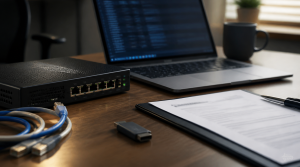
| Small useful spend | The design is sound but lacks one reliable link, management path, or recovery aid. | Managed switch, spare patch cables, labels, UPS for network gear, or a travel router for remote access testing. |
| Larger upgrade | Measured throughput, segmentation, VPN, Wi-Fi coverage, or routing limits block a real workflow. | Firewall appliance, access points with wired backhaul, 2.5GbE/10GbE switch, or a supported router platform. |
Useful Gear And Buyer Notes
The search links begin with YubiKey security key because strong administrator or user authentication can matter at this public boundary, but exact key compatibility depends on the application and identity provider. For a proxy host, firewall appliance, or power backup, verify supported updates, export and restore behavior, replacement options, idle power, and warranty before choosing a model.
Affiliate disclosure: As an Amazon Associate, TechGeeks may earn from qualifying purchases. The product links below are buying references, not a requirement to buy a specific brand or seller. Verify compatibility, seller quality, warranty, and current specs before ordering.
- Amazon search: YubiKey security key
- Amazon search: Intel N100 mini PC dual LAN
- Amazon search: Raspberry Pi 5 8GB kit
- Amazon search: UPS for router modem
- Amazon search: hardware firewall appliance 2.5GbE
Related TechGeeks resources
- Homelab VLAN Design: Simple Network Segmentation That Works
- IoT Isolation for Homelabs: VLANs, Firewall Rules, and mDNS
- WireGuard Home VPN: Secure Remote Access for Your Homelab
- Homelab DNS Guide: Local Names, Ad Blocking, and Reliability
What This Does Not Protect or Validate
Caddy, Nginx Proxy Manager, Traefik, ACME clients, certificate authorities, and identity services can change syntax, defaults, support windows, and account terms. Confirm the documentation for the exact deployed versions and challenge method before exposing the hostname or buying dedicated edge hardware.
A clean TLS connection, security-header check, or external port scan does not validate the upstream application's authorization, session handling, data protection, patch level, or backup. This article defines an exposure review and reader-run acceptance path, not a completed penetration test or disaster-recovery exercise.
Segmentation, VPNs, tunnels, DNS filtering, and reverse proxies reduce risk only when firewall rules, logs, updates, and account recovery are maintained.
Practical FAQ
What reverse proxy mistakes expose private services?
A reverse proxy is useful for HTTPS, clean hostnames, and routing web apps. It is not a security boundary by itself. Put access control in front of sensitive services, keep admin tools private, and log what is reachable. The important next step is to validate the recommendation with one small test before treating it as the default.
Should public and internal reverse proxies be separate?
Separate public and internal proxy routes when that makes policy and failure scope clearer, but separation alone is not the control. Public routes need explicit hostnames, authentication, logs, patching, and removal ownership; router, NAS, hypervisor, camera, database, and backup consoles should stay reachable only through the private administration path.
Where do MFA, firewall rules, access logs, and certificates fit?
MFA governs user identity, the firewall limits network reachability, proxy and application logs support investigation, and ACME maintains the certificate lifecycle. Document all four for the approved hostname, test their failure and denial paths, and preserve VPN access so public exposure can be removed without losing administration.
References
- https://caddyserver.com/docs/quick-starts/reverse-proxy
- https://nginxproxymanager.com/guide/
- https://letsencrypt.org/docs/rate-limits/
- https://owasp.org/www-project-secure-headers/
Final Thought
A reverse proxy should make a deliberate exposure plan easier to operate. It should not become a shortcut around that plan.
2 thoughts on “Reverse Proxy Setup Without Security Mistakes: HTTPS for Homelab Apps”