
HEVC
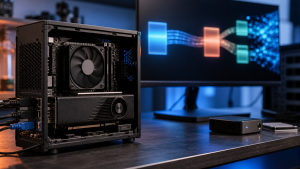
Quick Sync vs NVIDIA vs Intel Arc for Plex and Jellyfin Transcoding
Choose Quick Sync, NVIDIA, or Intel Arc from current codec support, driver and container fit, tone mapping, power, and measured concurrent demand.
Plex + Tdarr GPU Strategy: Sharing NVIDIA GPUs Without Hurting Playback
How to share an NVIDIA GPU between Plex and Tdarr without hurting live playback, including worker limits, scheduling, driver checks, and testing.
Custom Formats and Quality Profiles Explained for Radarr and Sonarr
Understand Radarr and Sonarr quality profiles, custom formats, minimum scores, upgrade behavior, language rules, and TRaSH-style scoring.
Radarr Homelab Setup Guide: Install, Update, Optimize, Lists, and Tdarr Integration
A detailed Radarr homelab setup guide covering install choices, updates, root folders, quality profiles, custom formats, import lists, download clients, Plex visibility, and Tdarr integration.
Sonarr Homelab Setup Guide: Install, Update, Optimize, and Connect to Tdarr
A detailed Sonarr homelab setup guide covering install choices, updates, paths, permissions, quality profiles, indexers, download clients, list behavior, Plex visibility, and Tdarr integration.
Building a Production-Grade Tdarr GPU Transcoding Stack for a Homelab
Deploy a pinned Tdarr server and GPU node with consistent paths, local cache, staged validation, quarantine, authentication, monitoring, and tested rollback.